Wantikajaku Jijikajaku:
For women + Children
Martu women are creating strong foundations for children to grow up healthy and confident, knowing who they are, where they belong and how to move strongly in both Martu and mainstream worlds.
Strong children. Strong women. Strong families.
Wantikajaku Jijikajaku — For Women and Children supports Martu families and communities to help children learn, grow and develop into confident Martu adults.
The program brings together culture, early learning, meaningful employment, women’s leadership and health.
These are not separate parts of the work. They reinforce one another.
Children learn with family and on Country. Women build skills and confidence through paid work. Families connect with schools and health services. Older women pass knowledge to younger generations.
The aim is to create strong foundations for children while strengthening the women, families and communities around them.
Five connected areas
The Wantikajaku Jijikajaku Program is built around five interconnected domains developed around Martu priorities for children, women and families.
Together they recognise that children's wellbeing cannot be separated from culture, family, women's work and leadership, learning and health.


Martu Employment
DOMAIN 3
DOMAIN 4
Martu Leadership

DOMAIN 5
Health
DOMAIN 2
DOMAIN 1
Martu Culture
Early Years Education

DOMAIN 1
Teach, learn and retain Martu cultural knowledge
Children learn who they are through family, language, Country and time with older people.
Wantikajaku Jijikajaku creates opportunities for children to spend time on Country with caregivers, Elders and family — learning Martu wangka, stories, bush foods, tracking, plants, water and knowledge of important places.
Learning happens through travelling, listening, watching and doing. It connects children with family and gives older people opportunities to pass knowledge to the next generation.
Culture is not an additional activity within the program. It is part of the foundation from which children learn, relationships are built and families remain strong.


“In the program, we teach the kids, we tell them stories, sitting around the campfire, so the kids can be ninti (knowledgeable). We teach them what’s good to eat and collect bush medicine. We want the children to be strong in their future.”
Louise Jeffries, KJ Women and Families Program Caregiver

DOMAIN 2
Young Martu children move between different worlds of learning.
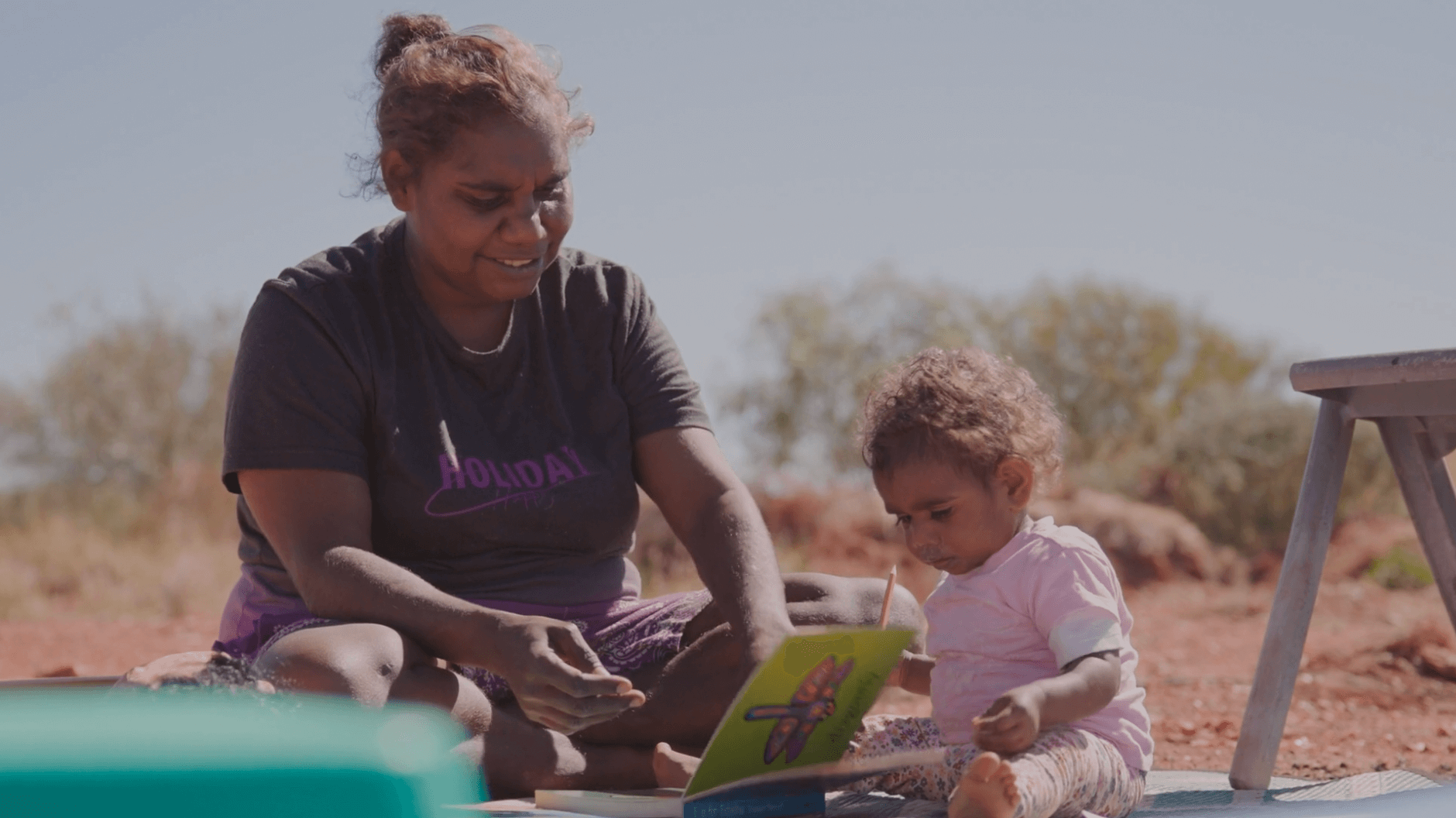
KJ playgroups create places where children can learn through play, family, Martu wangka and culture while also becoming familiar with the skills, routines and relationships they will encounter at school.
Caregivers are part of children's learning. Relationships with local schools can also help children become familiar with teachers and school environments before they make the transition into formal education.
The aim is not to replace Martu ways of learning with mainstream education. It is to help children grow confidently in both.
Intercultural Early Years Preparation


“All playgroup kids are the kids doing really well. They come to school for half a day, and then they go to playgroup. I’ve noticed increased attention, an ability to focus, and improved overall social skills in the classroom.”
Jigalong Classroom teacher, Kindergarten/Pre-Primary/Year 1


“Kids who go to playgroup are happy. They play, they do activities, they learn to make things. This helps them get ready for big school. It gives the kids confidence to learn school ways. It helped me a lot when I was little.”
Revina Dunn, KJ Women and Families Program Caregiver

DOMAIN 3
Meaningful Martu employment is built into the program.
Martu women work with children and families, support playgroups and activities, organise Country trips and help shape how the program operates in their communities.
Work can be structured around community life and cultural responsibilities while providing income, experience, skills and pathways to further training and employment.
It also changes what children see around them: Martu women working, teaching, organising and leading in their own communities.
Meaningful work for Martu women


“It’s good to work hard. It's good to help out. The mothers are learning what we do here. We support each other and learn from the staff. We also learn what the other communities are doing, getting ideas and trying them here at playgroup.”
Trisha Dalbin, KJ Women and Families Program Caregiver

DOMAIN 4
Martu women already hold important knowledge and responsibilities within families and communities.
Wantikajaku Jijikajaku creates additional opportunities for women to build confidence working across Martu and mainstream settings — speaking publicly, participating in training, learning from women in other communities and engaging directly with organisations that affect children and families.
This helps strengthen Martu influence over the decisions and services that affect community life.
Rather than external organisations deciding what families need, Martu women have stronger opportunities to identify priorities, explain what is happening and contribute to solutions.
Women’s Leadership


“We went to Tom Price
and visited Wakathuni community and the youth centre. We also went to school. The young girls spoke up—they were shaking from nerves. They talked up and shared what they do in playgroup. We were proud.”
Beth Jeffries, KJ Women and Families Program Caregiver

DOMAIN 5
Children's health is connected to family, culture, food, Country and the relationships families have with services.
Wantikajaku Jijikajaku creates culturally familiar opportunities for Martu families and health organisations to spend time together through playgroups, community activities and time on Country.
Women can raise issues affecting children and families, share Martu knowledge and explain what would make services work better. Health professionals have opportunities to build relationships and better understand the communities and families they work with.
Activities can connect everyday health and wellbeing with Martu knowledge, including healthy food, bush foods and medicines and children's development.
Maternal and Child Health


“Thank you so much to the wonderful Martu women who talked with us about what mums need during pregnancy, and what bubs need to grow up healthy and strong. Martu women’s voices are so important—they provide us with the right information so we can understand what needs to be done to make things better for mums and bubs in the Western Desert communities. We are so grateful for their contributions, and talking to the Martu women was a highlight of this year.”
Telethon Kids Research Institute Staff Member
Strong foundations across generations
The program began with early childhood, but its development has shown that children cannot be separated from the families, culture and communities around them.
Strong children need strong connections to family and Country.
Strong families need women with opportunities to work, lead and influence the services that affect them.
And keeping this work strong over time means continuing to create opportunities for older women to pass knowledge to younger women and children.
Wantikajaku Jijikajaku brings those things together.


Follow our journey
Get the latest KJ news, stories and announcements