
The story behind the 12 Martu outcomes

2021 Martu Outcomes
Summary Report
2021 Martu Outcomes Report
2025 Martu Outcomes Report
The 12 Martu outcomes
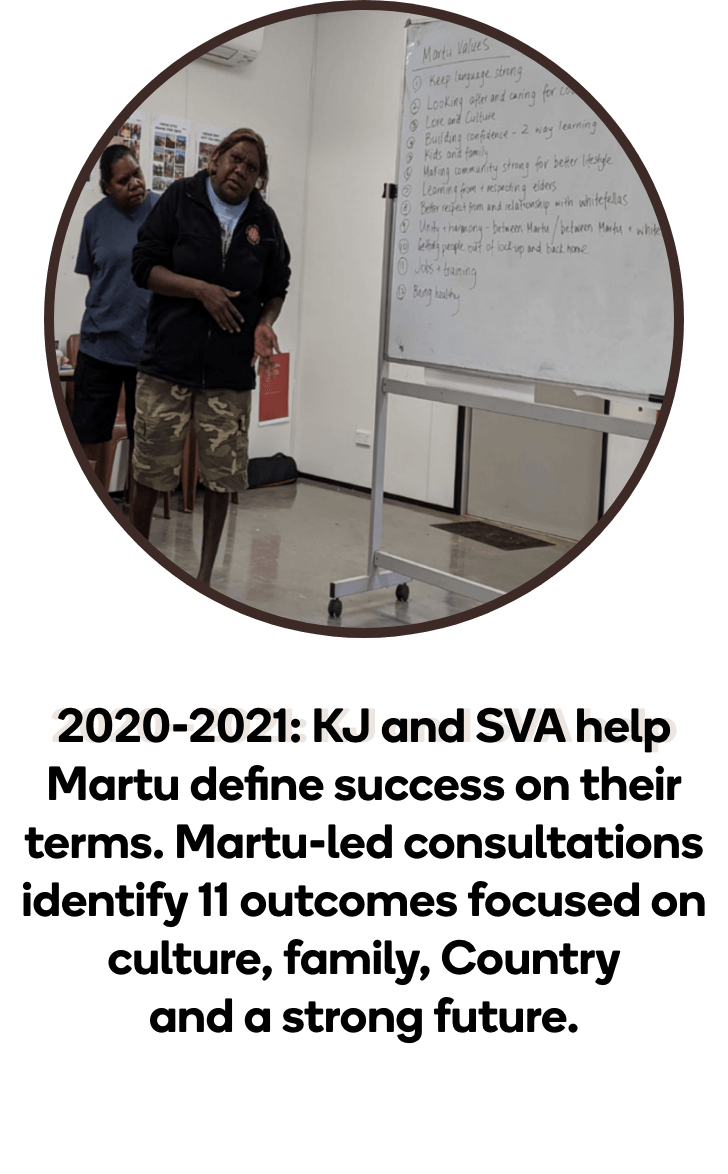
These outcomes articulate what is important to Martu and what they believe is needed to preserve their traditional identity and culture while redefining their future in their modern engagement with the Western world.
NGURRA
Looking after and caring for Country
Country is sacred to Martu. Martu identity, beliefs, creation stories, sacred sites, cultural practices and traditional livelihoods are embedded in and inextricably linked to Country. Martu describe looking after Country as akin to looking after their sense of identity and family. Martu believe country looks after them and they must look after Country.
“You go home and you tell Country you are coming and Country knows you are coming.”
MLP member (2020)
WANGKA
Keeping language strong
Martu want to keep their language strong so they can pass it onto future generations. For Martu, language is important for cultural continuity and keeping the traditional knowledge strong. Language is also a direct link to Country. Language allows them to speak to and maintain their relationship and connection with Country. Martu feel a sense of urgency to preserve their language due to the decreasing number of elders in communities.
“Language is in the Country and the Country is alive. Martu need to know language, to know the Country”
MLP member (2020)

NINTI
Learning from and respecting old people
Old people are the leaders and teachers in Martu communities. They hold the connection to the Pujiman (desert-born) way of life and have extensive traditional ecological and cultural knowledge of their Country. Martu want to learn cultural knowledge from the old people, to respect them and to earn their respect in return. They want to learn about clans, family, Country, language, lore and identity. Martu feel a sense of urgency to learn from old people due to the decreasing numbers of Elders in communities.
“Old people are the boss and the teachers. Listen to them. Make them feel happy and proud.”
MLP member (2020)
WALYJA
Looking after kids and family
Martu want their children to stay away from trouble (particularly in town), to establish a strong connection with family and Country at a young age and to engage meaningfully in learning (both Martu way and ‘whitefella’ way). Martu are concerned that their children are increasingly becoming involved in trouble in town, losing respect for family and their connection to culture and Country.
“If you don’t know your family you are nobody. Look after family and funerals.”
MLP member (2020)
KUJUNGKARRINI
Unity and harmony between Martu
Martu want all Martu to live in unity and harmony with each other. Martu acknowledge that in the past fighting and tension between communities and families was destructive. Martu want more productive relationships where all Martu can work together for a better future.
“We worked out where we fit together. We became kin with each other and not just individual families and fragmented.”
MLP member (2020)
STRONG COMMUNITIES
Making community strong with a high standard of living
Desert communities are important to Martu. They are where Martu can live close to their traditional lands in a society that is predominantly Martu, thereby enabling them to fulfil deep cultural obligations to look after Country within an environment they can shape. It is where they want to live but Martu are increasingly concerned about the deteriorating state of the infrastructure in their communities (particularly housing). They want to build stronger communities to improve their standard of living and ultimately attract more Martu back to communities and back to Country.
“In community we need better houses…We need better housing, so people come back to community…we are going around in circles and need action.”
Parnngurr community member (2020)
CONFIDENCE
Building confidence through two-way learning
Martu, particularly young men and women, have a strong desire to learn about ‘whitefella’ ways (e.g., modern technology, corporate governance, justice system) while continuing to strengthen their knowledge of Martu ways. Martu see this synergy between the ‘whitefella’ way and Martu way and building confidence through learning both as critical to them shaping a new future for Martu in modern Australia.
“We learn about white man world and black man world together.”
Parnngurr community member (2020)
BACK TO COMMUNITY
Getting people out of town, out of ‘lock up’ (prison) and back to community/Country
Martu have been plagued by the destructive consequences of living in town (Newman and Port Hedland) over generations. Martu consistently associate ‘lock-up’ (prison), police, court, fighting, wama (alcohol), drugs and jealousy with their experience of town. Martu want their people, particularly young people, to move back to communities where alcohol and drugs are not available, where they can be closer to Country and away from toxic influences in town.
“I went back and my spirit is good. Went to see my Country. My spirit became itself again. I became reconnected to Country. I went east and saw my Country.”
Wama Wangka participant (2020)
RESPECT
Better respect and relationship with ‘whitefellas’
Martu want to be genuinely respected by ‘whitefellas’. They want their extensive cultural, traditional and ecological knowledge that has been built and cultivated over thousands of years and generations to be recognised. They want to build a productive working relationship with ‘whitefellas’ grounded in mutual respect that acknowledges the strength and legitimacy of Martu society. Martu see this as an important step to shaping a new future for Martu, together with ‘whitefellas’, in modern Australia.
“Whitefella and Martu understanding each other and working together properly in a way that respects Martu.”
MLP member (2020)

WORK
Work and training
Martu want more opportunities for training and diverse work options. Martu aspire to a stronger economy with work, training and economic forms that align with Martu social aspirations and constraints. Martu also want more training opportunities based in community so that more Martu will move away from town and back home closer to Country.
“More courses and more training and more skills and different jobs.”
MLP member (2020)
HEALTH
Being healthy
Martu want to be healthier. Martu experience very high levels of disadvantage in their health outcomes, primarily caused by “whitefella poison”, namely wama (alcohol), drugs and high sugar diets. Martu often reflect on the spiritual and physical strength of Pujiman (desert-born Martu) and aspire to become healthier like their ancestors.
“There are a lot of problems. Blood pressure, diabetes, wama [alcohol], blocked arteries, ice, drugs coming in.”
MLP member (2020)

Safety
Making people safer
Martu want to be safe and keep others safe. Martu have always lived and worked in an unforgiving environment, but the impact of colonisation has greatly increased safety concerns, particularly with the high rates of family violence and neglect in Martu communities. This outcome addresses the safety concerns of Martu across a broad range of areas: workplace safety, women’s safety, children’s safety, Martu supporting each other, support for Western staff and cultural safety – including keeping people safe from the potentially dangerous power of ngurlu (secret sacred) locations and objects.
From outcomes to impact
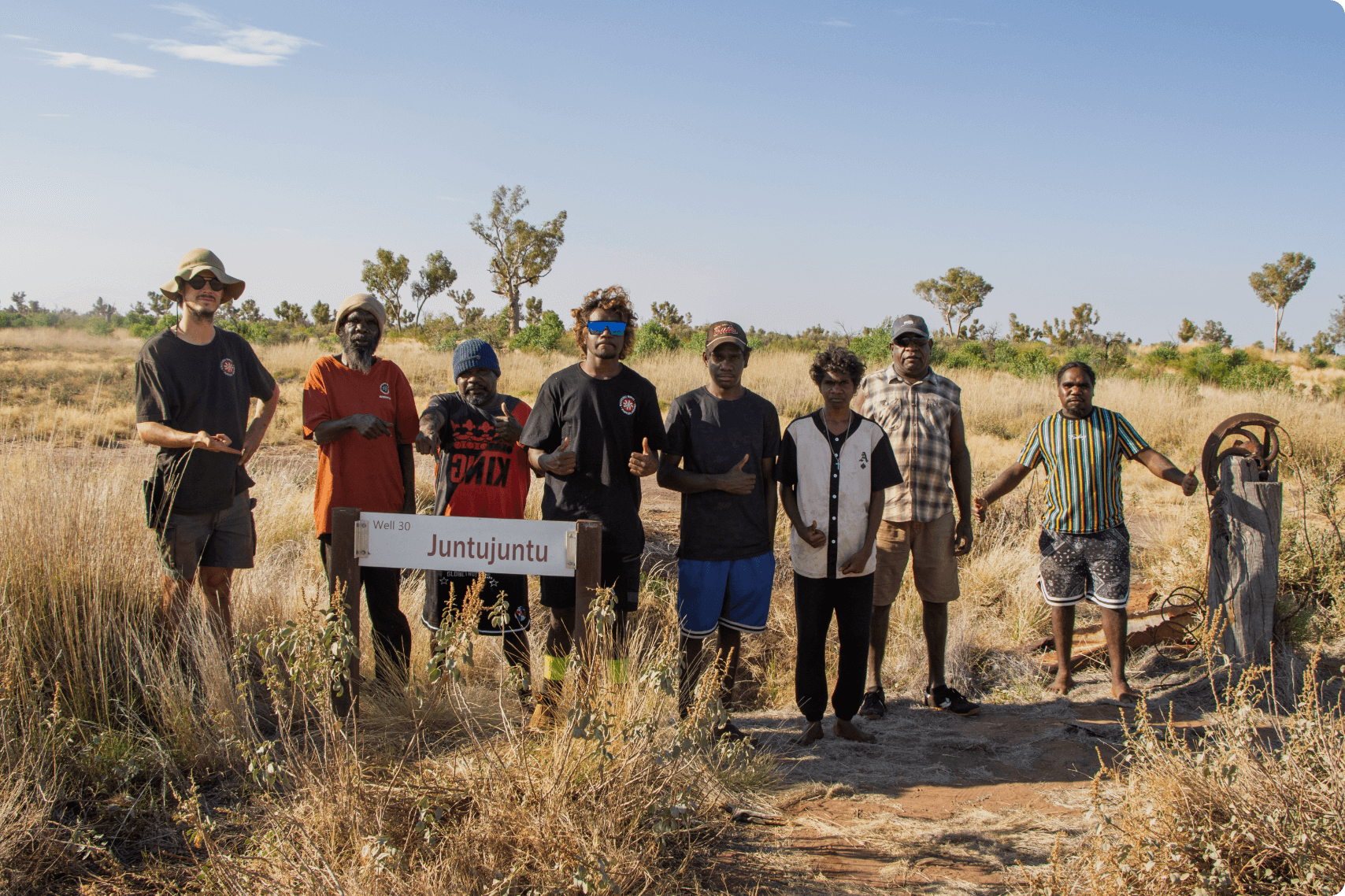
The 12 Martu outcomes define what success looks like. They guide our partnership and measure our impact. Through community-led programs, cultural initiatives, and on-Country work, Martu voices and aspirations shape everything we do. See how KJ is helping to drive change and build Martu leadership, strengthen families, care for Country and language, improve health, and create safer, more connected communities.
Follow our journey
Get the latest KJ news, stories and announcements