Language Program
Traditionally, seven languages were spoken across Martu country, forming seven contiguous regions named after the traditional language groupings. Martu see these regions of country not simply as being where the speakers of the languages reside, but rather, the languages are embedded in and describe the country. In this way, Martu languages encode a wealth of cultural, spiritual and ecological knowledge.
Through KJ’s language program, the capability of Martu adults to understand the richly complex and intricate cultural and ecological knowledge encoded within Martu languages and stories is being recovered and honed. When once asked what motivates Martu to work, KJ’s senior cultural advisor said three words:
ngurra (homelands)
kalyu (sacred waters); and
wangka (language and story).
All three are inseparable from one another, and all three are of vital importance to Martu. For this reason, the language program is being integrated into all facets of KJ’s work, where younger Martu work on-Country alongside elders, through KJ’s cross-cultural leadership program and in KJ’s Women and Families and Junior Ranger programs.
This work ensure that important linguistic, cultural and ecological knowledge about Martu land, society and values remains alive and passed down to future generations.
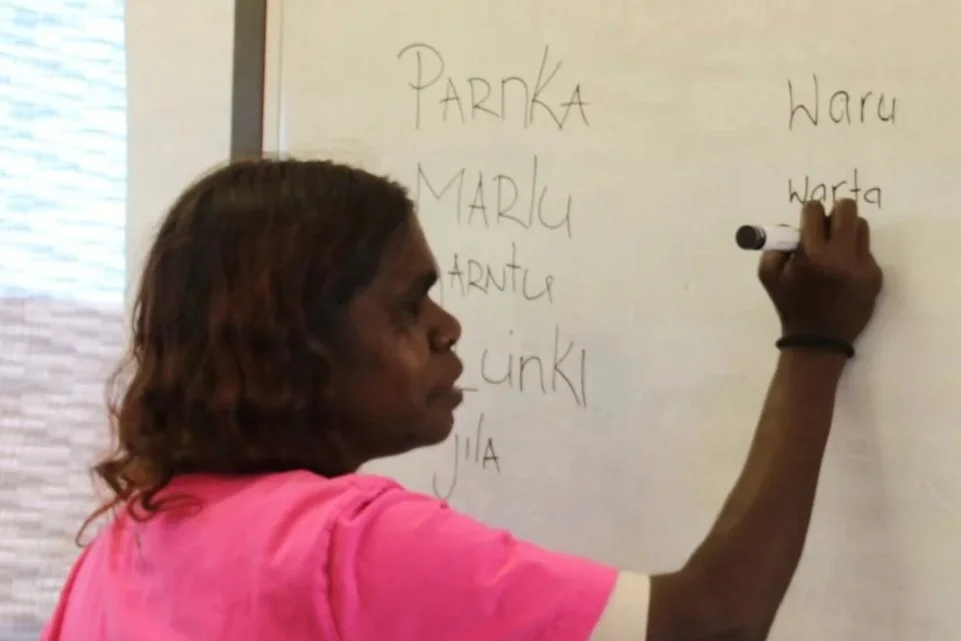
Teaching Martu languages
“Wangka walyja-ya kanyilkuranpa nantirrpa jijilu marlajanulu wulu. Jirlpimili wangka-ya junku, martumili, puntumili, jijilu marlajanulu kanyilkuranpa nantirrpa wangka – yuu! Wulu! Wulu marlajanuku, marlajanulu jijilu kanyilkuranpa. Pakinga-ya watarrku junku. Yilta – mirta-raya watarrku junkura wulumili wangka walypalamiliku wangkaku watarrjunku ngayunmili wangka. Watanyjaparnilu-ya kanyilkuranpa ngayunmili wangka nantirrpa…Martu ninti ngaa – yuwa – Martukurranyi languageprogramku!”
“Future generations with tenacity must keep properly holding onto and caring for the languages and stories they belong to, forever. The languages and stories belonging to the old people that will be left behind by the old people – the languages that belong to Martu, that belong to initiated men – future generations of children must keep properly holding onto and caring tenaciously for these languages and stories. Yes, forever! Forever for future generations, by future generations of our children, they will continue being looked after. Our future generations of children will not leave them behind by accident. Truly — they must not accidentally leave behind languages that belong to eternity for the languages that belong to whitefellas, and forget about the languages and stories that belong to us. As people without absence of mind who don’t forget, they need to keep properly holding onto and caring for our languages and stories tenaciously… It’s Martu ninti this — yes — and Martu lead the way for this language program!”
— Muuki Taylor, KJ Senior Cultural AdvisorListen to Warnman language spoken Warnman is a critically endangered language of the Western Desert. The language group and it’s Country sit central to other Martu language groups including; Kartujarra, Manyjilyjarra, Putijarra and Nangajarra/Yulparija. There are only a few fluent speakers of Warnman language these days, who live between Martu communities and as far away as Perth. KJ’s annual Warnman language camps bring fluent speakers and younger generations of Warnman Martu (patuparaku) together on Warnman warrarn (Country). These camps are where language is spoken, shared, reconnected and passed on.
Language lives when people speak it, teach it and hear it around them. Across Martu ngurra (country), six related languages connect people to particular walyja (families), places and histories. Each carries its own words, ninti (knowledge) and ways of understanding the world. ‘Keeping wangka (language) strong’ is a Martu-specified outcome of KJ programs. It encompasses recording language with family and linguists and creating places for it to be spoken, learnt and used in everyday life. This work is building the people, resources and everyday opportunities needed for wangka (language) practise to stay strong. Children are hearing and using wangka (language), younger adults are gaining experience teaching it, and important wangka (language) is being recorded while it can still be learnt from the remaining fluent speakers. Each lesson, conversation, song and recording helps keep wangka (language) alive with Martu; spoken, used and carried forward by the next generation.
Cultural Programs
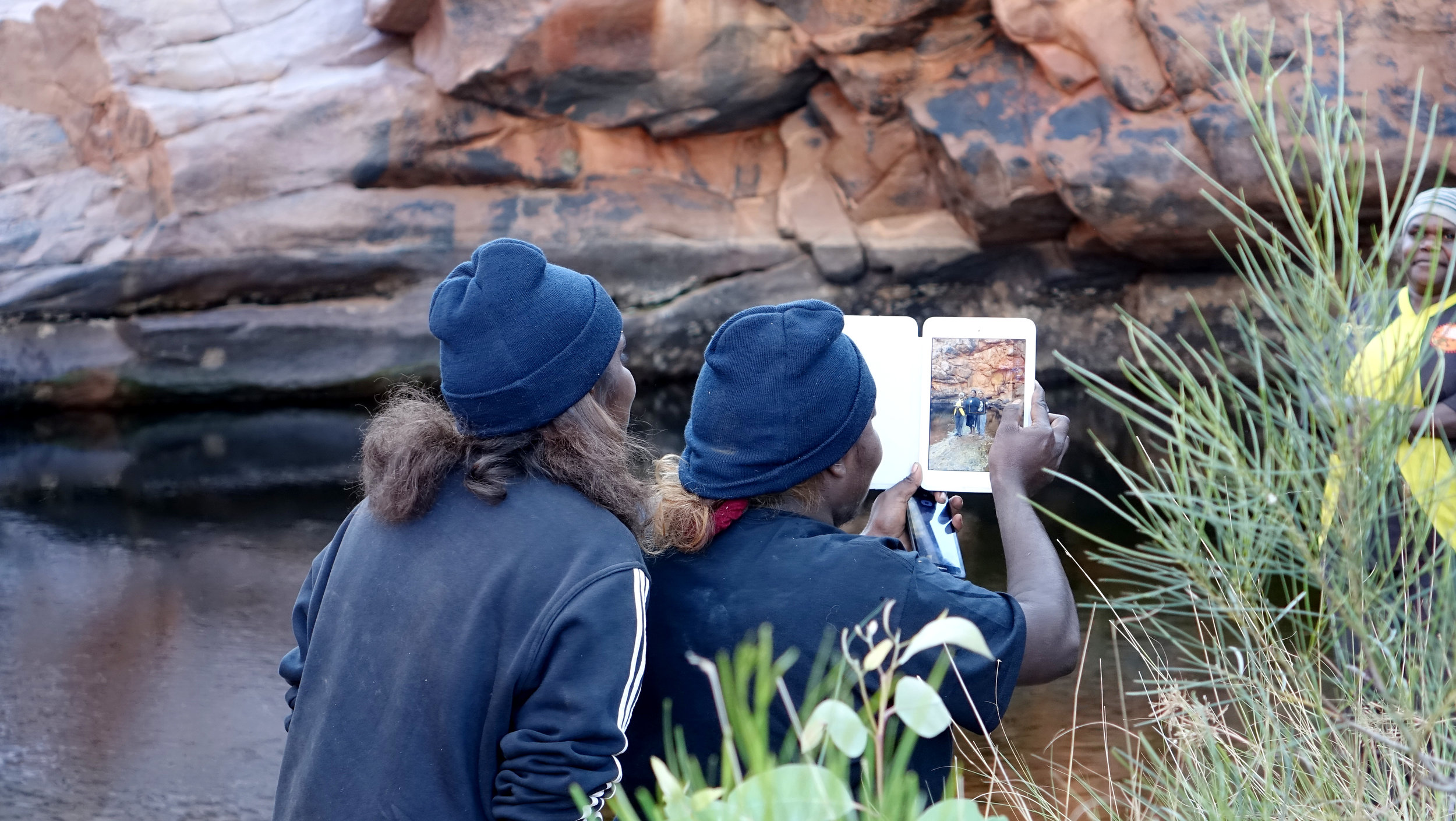
Oral Histories

Cultural Archive
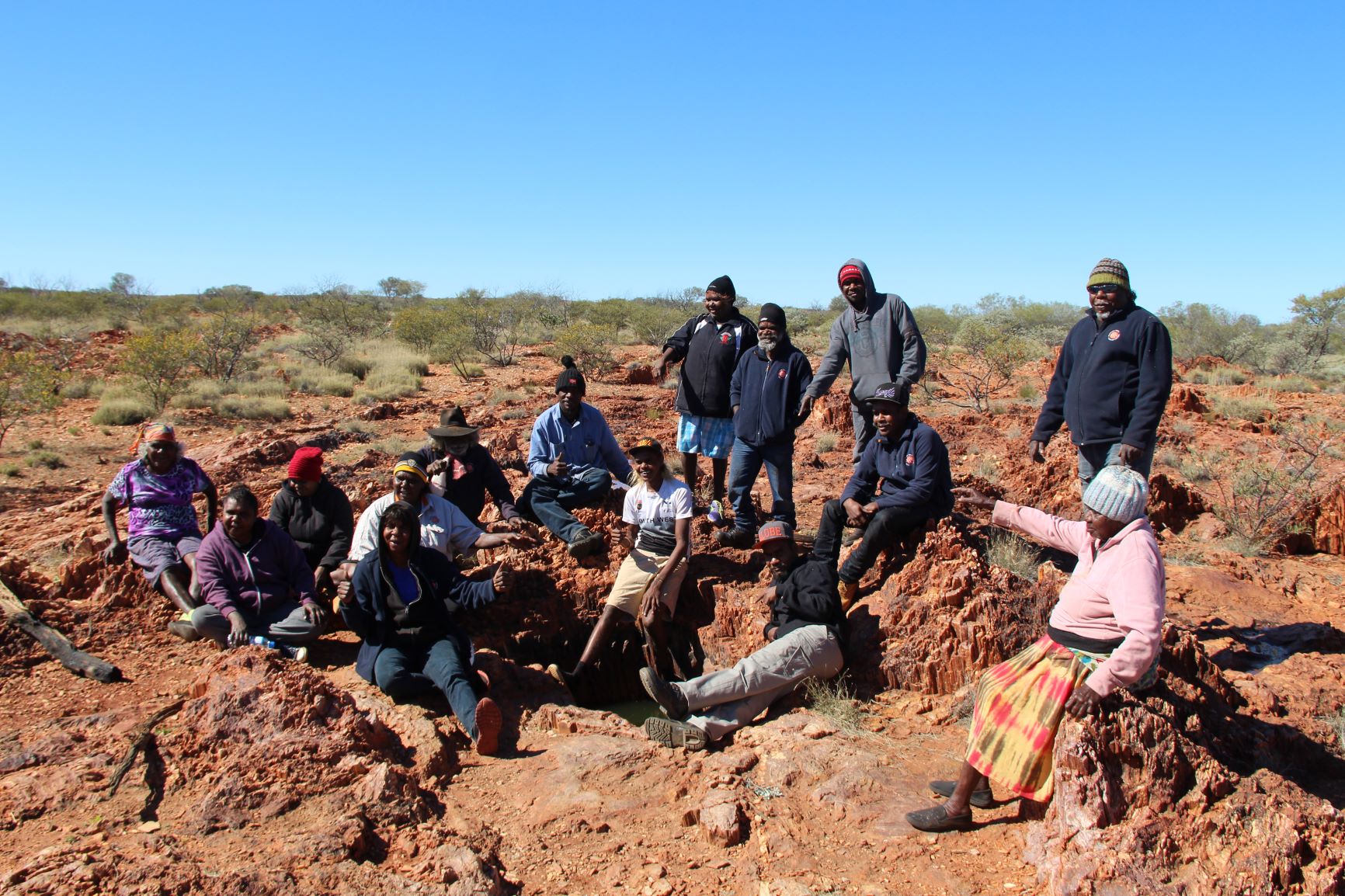
Family Trees

Helicopter Mapping
